Interceptor Templates
Introduction
Interceptor templates are reusable blueprints that streamline the creation of interceptors in DIAL. They save time by eliminating repetitive configuration when setting up similar interceptors.
To learn more about interceptors, refer to Interceptors.
Once created, interceptor templates can be selected as a source type when creating new interceptor entities.
Main Screen
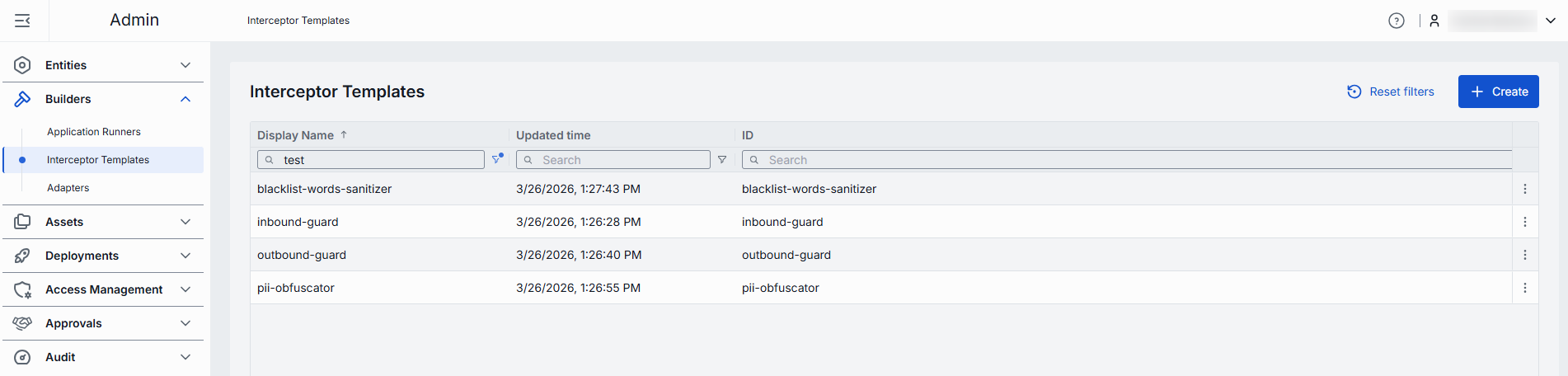
On the main screen, you can add and manage Interceptor Templates.
Interceptor templates grid
| Field | Description |
|---|---|
| Display name | Name of the interceptor template displayed on UI (e.g. "PII Obfuscator", "Words Blacklist", etc.). |
| ID | Unique identifier. |
| Description | Description of the interceptor template. |
| Topics | Semantic tags associated with interceptor template. Topics can be used for identify and filter templates on UI. |
| Creation Time | Creation timestamp. |
| Updated Time | Timestamp of the latest update. |
Create
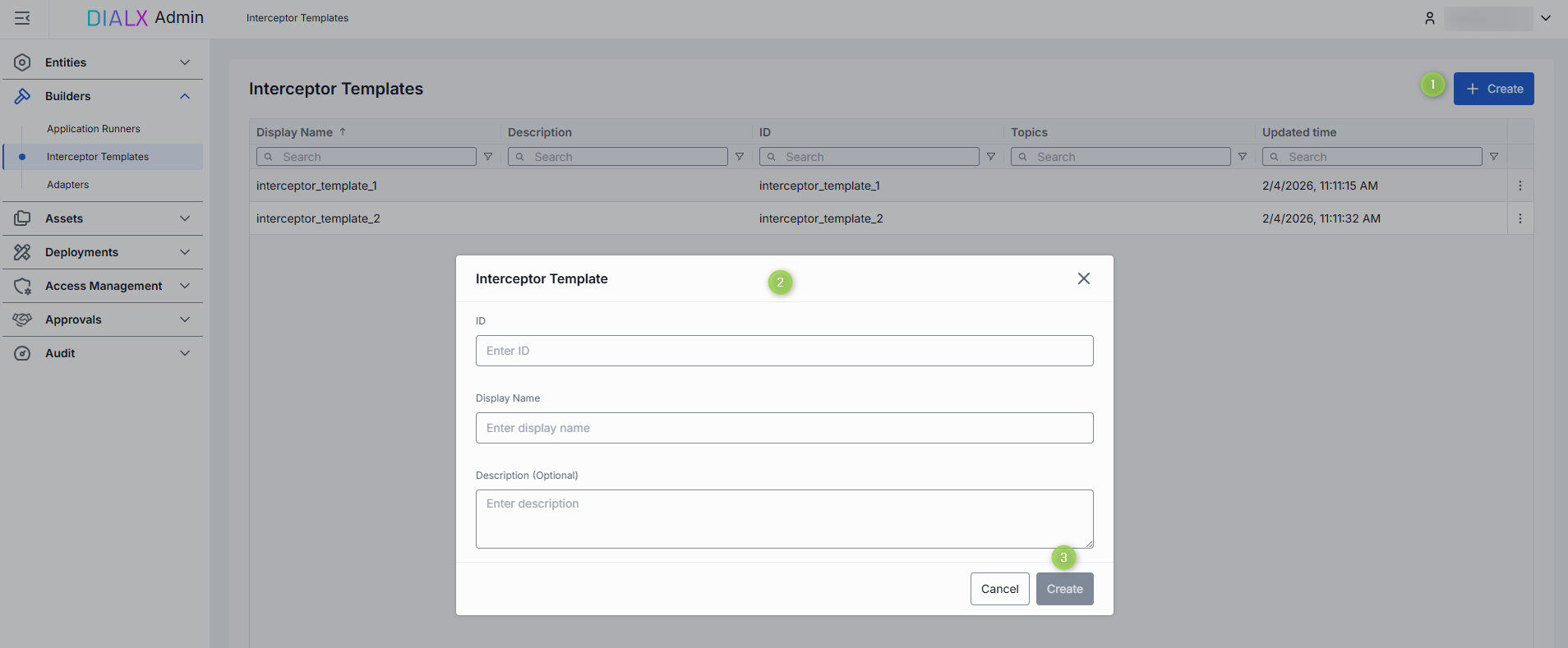
On the main screen of Interceptor Templates, you can create a new interceptor template by following these steps:
-
Click + Create to invoke the Interceptor Template modal.
-
Define key parameters for the new interceptor template:
Field Required Definition ID Yes Unique identifier. Display name Yes Name of the interceptor template displayed on UI. Description No Description of the interceptor template. -
Once all required fields are filled, click Create. The dialog closes and the new template configuration screen is opened. A new template will appear immediately in the listing once created. It may take some time for the changes to take effect after saving.
Configuration
Click on an interceptor template from the main screen to open its configuration screen.
Top Bar Controls
- Create Interceptor: Creates an interceptor with the current interceptor template. Created interceptor can be found in Entities -> Interceptors.
- Save: Saves any changes made to the interceptor template.
- Discard: Reverts any unsaved changes made to the interceptor template.
- Delete: Permanently removes the selected interceptor template. IMPORTANT: All related interceptors still bound to it will be deleted as well.

Create Interceptor
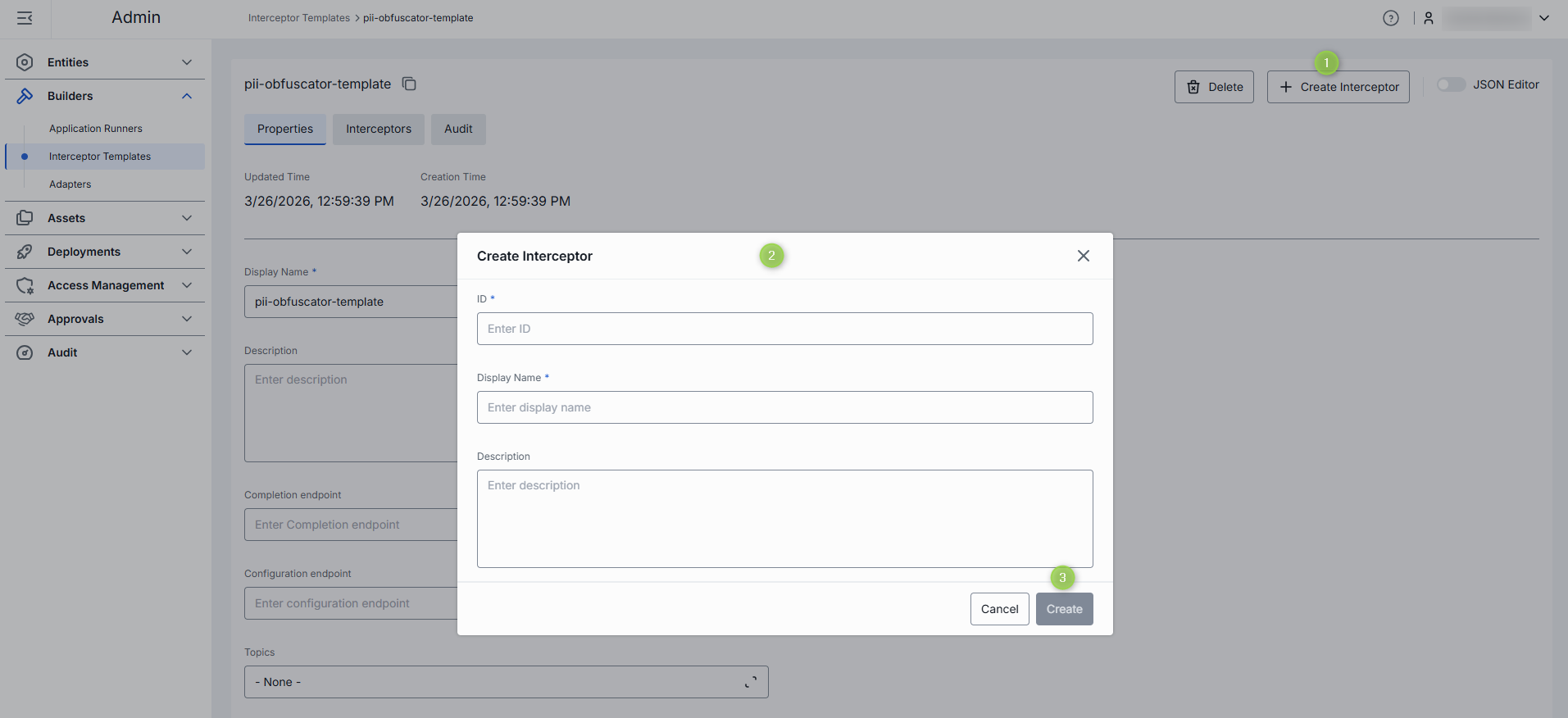
On the configuration screen, click + Create Interceptor to create a new interceptor entity based on the selected template.
- Click + Create Interceptor and fill in the pop-up form.
- Click Create to apply. The configuration of the new interceptor entity opens up. You may notice, that the template used is pre-populated in the Interceptor Template field.
Properties
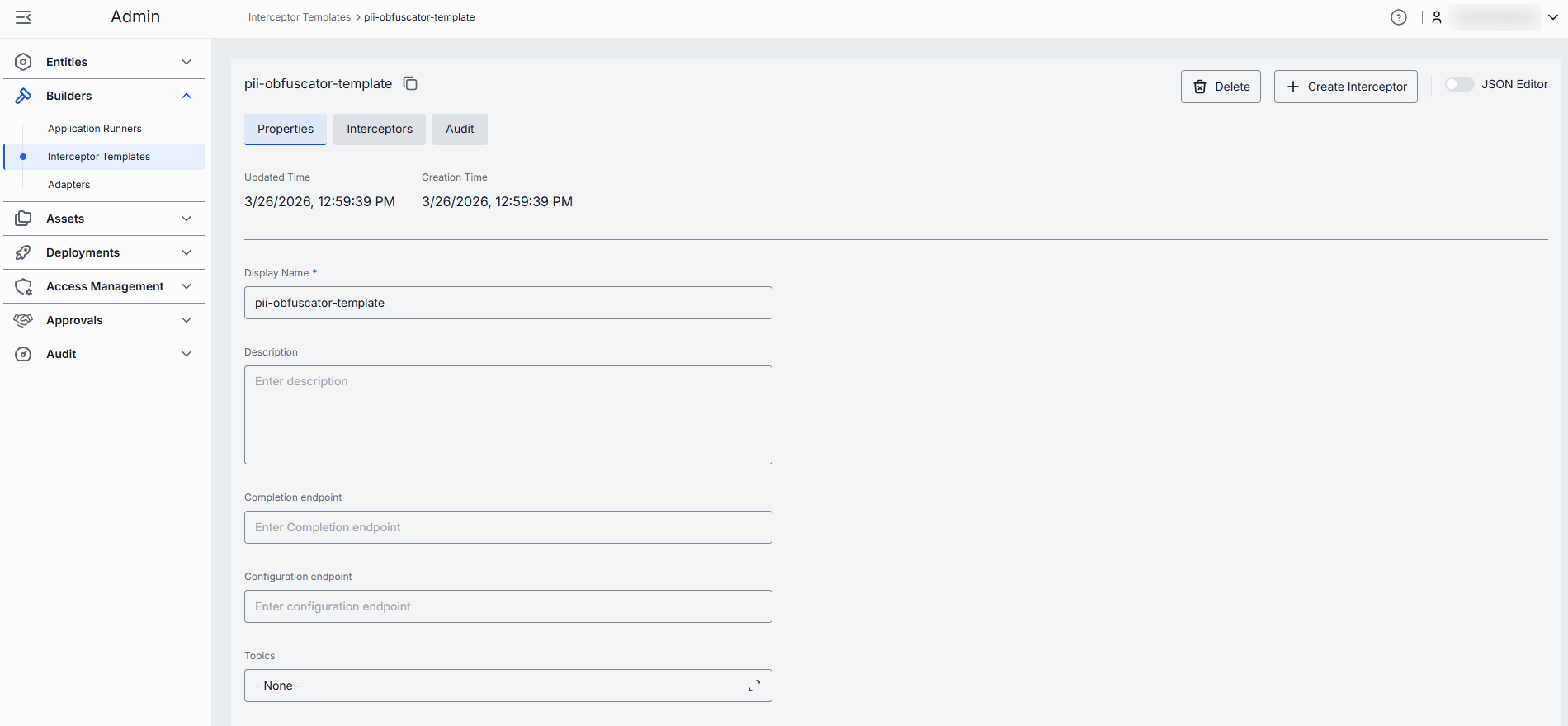
In the Properties tab, you can preview and modify identity, metadata and endpoints of interceptor template.
| Field | Required | Editable | Description |
|---|---|---|---|
| ID | - | No | Unique ID of the template (copyable). Cannot be changed after interceptor template is created. |
| Updated Time | - | No | Timestamp for changes tracking and audit evidence (e.g., to verify when the last change was done). |
| Creation Time | - | No | Creation timestamp. |
| Display Name | Yes | Yes | Name of the interceptor template displayed on UI (e.g. "PII Obfuscator", "Words Blacklist", etc.). |
| Description | No | Yes | Description of the interceptor template and how it can be used. |
| Completion endpoint | No | Yes | URL of the interceptor service. This URL is used by DIAL Core to handle requests and responses for the interceptor. |
| Configuration endpoint | No | Yes | URL that exposes the configuration of the interceptor as a JSON schema. |
| Topics | No | Yes | Semantic tags associated with interceptor template. |
Interceptors
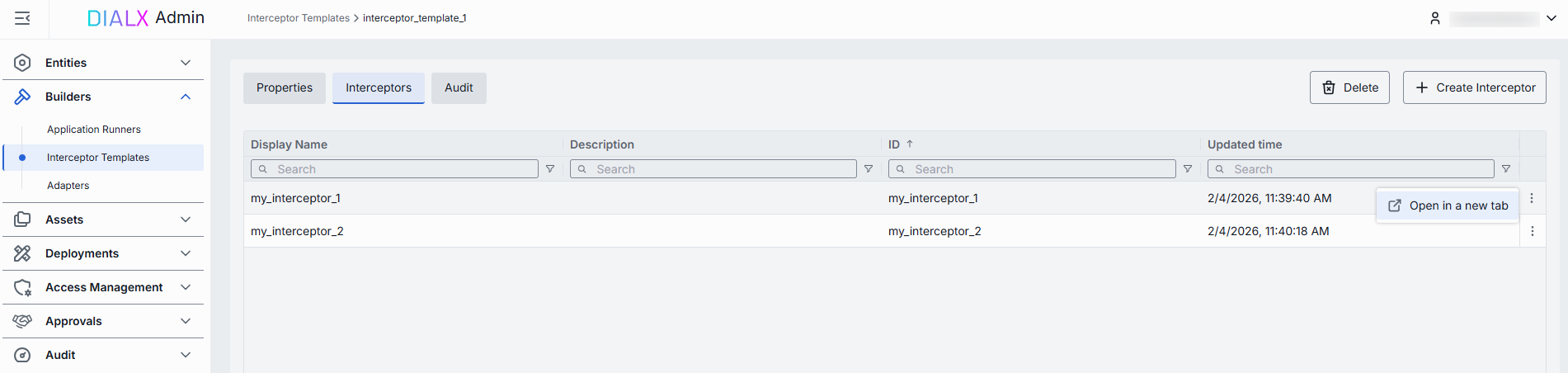
A read-only grid showing all interceptor instances created from this template. Use it to assess potential impact before template edits or deletion.
From the actions menu of each interceptor you can navigate to its configuration in Entities/Interceptors section.
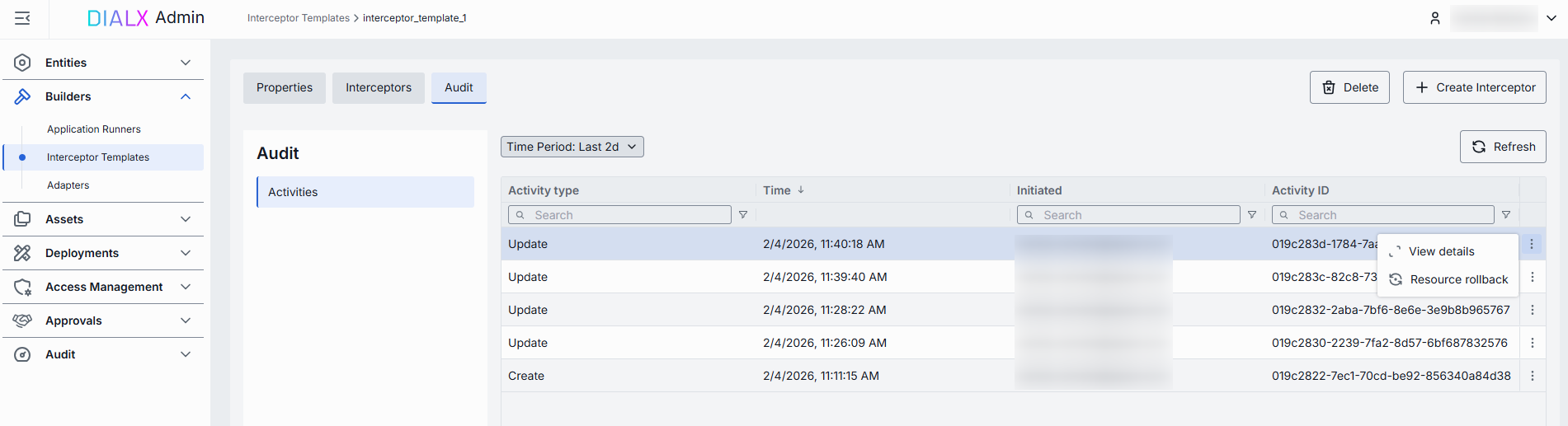
Audit
On this screen, you can access a detailed preview and revert any changes made to the selected interceptor template.
TIP: This section mimics the functionality available in the global Audit → Activities menu, but is scoped specifically to the selected template.